Free · 10 artifacts a day

Anthropeum

Where in the world, and when

A daily game built from museum collections. Each round shows one object and asks two things at once: where it was made, and when. You drop a pin on the map, choose a period, and the score reflects the distance on both. Ten objects make the day's set, and everyone answers the same ten.

  • Two guesses per object: place and period
  • Ten artifacts a day, the same for everyone
  • Drawn from 500,000 museum objects
  • Your result is ranked against today's players
01 / 10MAP + ERA
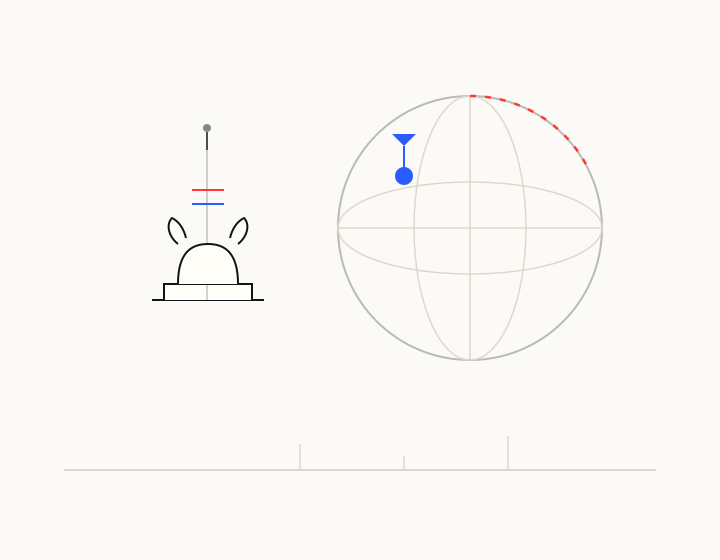
A pedestal holding a vase silhouette beside a wireframe globe with a blue location pin

An object carries two coordinates

Most guessing games ask for one answer. Anthropeum asks for a location and a date, and it scores them separately.

Getting the region right usually narrows the period, and getting the period right narrows the region, so the two guesses inform each other even though they are made one after the other.

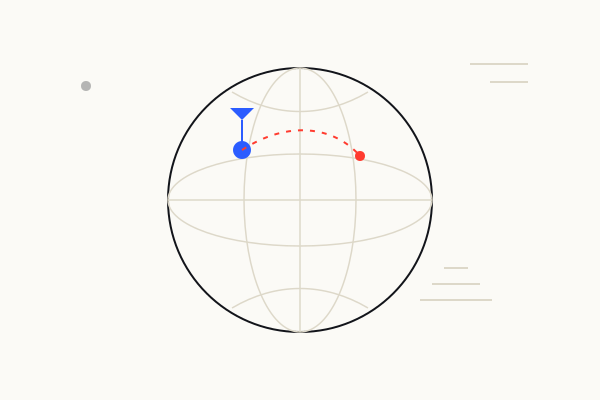
A meridian grid globe with one pin planted on a landmass and a red arc towards a second point
FIG. 01
Anthropeum Game@anthropeum

A pin and a period, not a multiple choice

There is no list of countries and no row of centuries to pick from. You place a marker anywhere on a world map, then choose a period for the object, and both guesses are measured against the real answer. Because the map is free-form, a guess can be wrong by a border or wrong by a continent, and the scoring reflects that difference rather than treating both as failures.

Anthropeum Game@anthropeum

What the material tells you before the map does

Porcelain, bronze, carved wood, woven fibre and worked stone each point at a set of regions and a stretch of history. Reading the surface is usually faster than guessing from shape: a glaze, a casting seam or a type of weave can rule out half the world before the pin moves. The game never labels the material for you, so the first few seconds of each round are spent looking rather than deciding.

Four horizontal bands crossed by a dotted vertical line with one marker sitting between the middle layers
FIG. 02
Six bars of increasing height with a marker pinned at the fourth step and the last bar solid blue
FIG. 03
Anthropeum Game@anthropeum

Two distances, one score

A guess is judged on how far the pin sits from the place of origin and how far the chosen period sits from the real one. Closeness on either axis earns something, which is why a confident answer on one and a rough answer on the other still produces a usable round. The two errors do not cancel each other out, and a perfect location with a wrong century is not the same result as the reverse.

Anthropeum Game@anthropeum

A rank, not only a total

The day's ten objects are shared, so the result screen can place you against everyone who played the same set. That comparison is more readable than a raw score because the difficulty of a set varies: a run of obscure objects makes a modest total respectable, and an easy set makes a high one ordinary. The rank accounts for that without you having to judge it.

Result tiles from a day's ten objects, one ringed red and one shaded blue
FIG. 04
A dotted route crossing a plain between two ringed markers with smaller dots spaced along it
FIG. 05
Anthropeum Game@anthropeum

Half a million objects behind ten rounds

The artifacts come from museum open-access collections, roughly five hundred thousand of them, which is why the sets do not repeat the same famous pieces. Each object keeps its catalogue record, so the reveal can say what it is and where it is held. Ten rounds is a small sample of that library by design: it keeps a day short and leaves the collection feeling larger than the game.

02

What a round asks of you

Look, place, date, then find out how far off you were.

01

A map instead of a dropdown

You can pin anywhere, so the answer has a distance rather than a category. Being one country out is a different mistake from being one hemisphere out.

02

A period chosen separately

Place and date are scored on their own axes. A strong location does not rescue a weak date, and the reveal shows both.

03

Materials as evidence

Surface details such as glaze, patina or weave point at regions before shape does. The game leaves them unlabelled, so the reading is yours.

04

A rank against the same ten

Everyone plays the same objects that day, so the comparison is fair. The rank absorbs how hard the particular set turned out to be.

05

Records from real collections

Objects come from open-access museum catalogues and keep their catalogue details. The reveal names the piece rather than leaving it anonymous.

06

Browser only

A map, a period selector and ten images. It works on a phone or a laptop with nothing installed and no account needed.

03

How a day runs

Four moves, ten objects.

  1. 01

    Study the object

    One artifact appears with no caption. Read the material, the decoration and the wear before touching the map.

  2. 02

    Drop the pin

    Place the marker where you think the object was made. Zoom if the region is uncertain, because the distance is measured from the exact point.

  3. 03

    Choose a period

    Pick the era you believe it belongs to, then submit both guesses together. The true place and date are revealed with the object's details.

  4. 04

    Finish the ten

    After the last object the day's total is scored, and your position among everyone who played the same set appears with it.

04

How players read an object

Three approaches from people who play the ten.

I look at the glaze before anything else. Once I have decided it is tin-glazed, half the map is gone and the period is usually close behind.
EDElena D.Ceramics first
We pin separately and then compare. Our errors are almost never on the same axis, which is why the two-guess format is more interesting than a single answer.
RMRavi M.Plays with a colleague
The reveal is the part I stay for. I have looked up more objects after a round than I ever did in a museum shop.
JPJohanna P.Reads the catalogue afterwards

05

Questions about Anthropeum

The two guesses, the collection and the daily ranking.

Ten objects, twenty guesses

Place the pin, choose the era, and find out how far a first impression travels. Today's set is already on the table.

Play today's ten